 K3Nova
Sparse routing
Each token is routed through selected experts rather than every expert, which changes compute cost per token.
MoE architecture
Understand Kimi K3 as a Mixture-of-Experts model: total parameters, activated parameters, experts, routing, context, and hardware implications.
| Term | Kimi K3 value | Plain meaning |
|---|---|---|
| Total parameters | 2.8T | Full model scale |
| Activated parameters | 104B | Approximate active portion per token |
| Experts | 896 | Specialized parameter groups |
| Selected experts per token | 16 | Experts routed for each token |
| Context length | 1,048,576 tokens | Maximum listed context window |
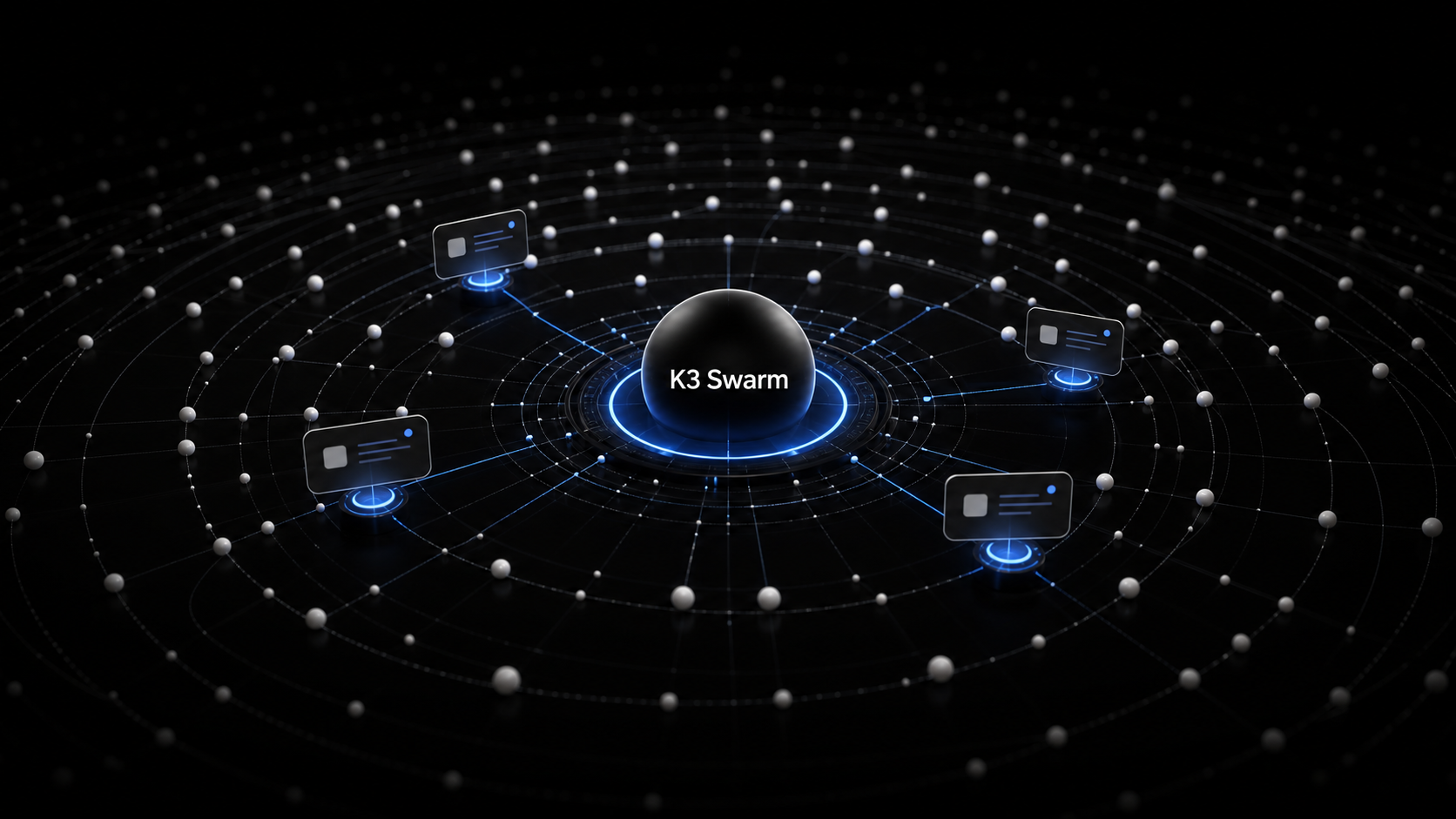
Kimi K3 uses a Mixture-of-Experts architecture. Official materials list 896 experts, 16 selected experts per token, 2 shared experts, and 104B activated parameters out of 2.8T total parameters.
MoE improves efficiency because only part of the model is active for a token, but it does not make the full model small. The system still needs access to the full expert set.
Use this section to keep the next step practical before you touch accounts, files, infrastructure, or hardware.
| Check | Look for | Why it matters |
|---|---|---|
| Read the official source | Start with the model card, help center, docs, or official product page before trusting summaries. | Model names, limits, and prices change. |
| Name the path | Decide whether you need a hosted app, API call, local client, or full self-managed deployment. | Different paths have different costs and account boundaries. |
| Check the boundary | Keep login, payment, API keys, private files, and account settings on the official surface. | A public guide should help you choose, not handle sensitive actions. |
| Keep evidence | Save the source link, date, version, and practical next step that shaped your decision. | This makes later review easier for a team. |
Each token is routed through selected experts rather than every expert, which changes compute cost per token.
Shared experts provide common capacity alongside routed experts.
The full expert set still has to be stored, so deployment planning remains memory-heavy.
2.8T Full model scale
104B Approximate active portion per token
896 Specialized parameter groups
16 Experts routed for each token
1,048,576 tokens Maximum listed context window
It means Kimi K3 routes each token through selected experts instead of activating the entire model.
No. It reduces active compute per token, but the full expert set still needs to be stored.
Routing across experts can make interconnect and serving software as important as raw VRAM.