Before comparing answers, confirm that the console, API, or cloud account is actually using claude-opus-5 or the intended provider route. If the route is unclear, the test result is not trustworthy.
Check the active model label and provider route first.
Checking model service...
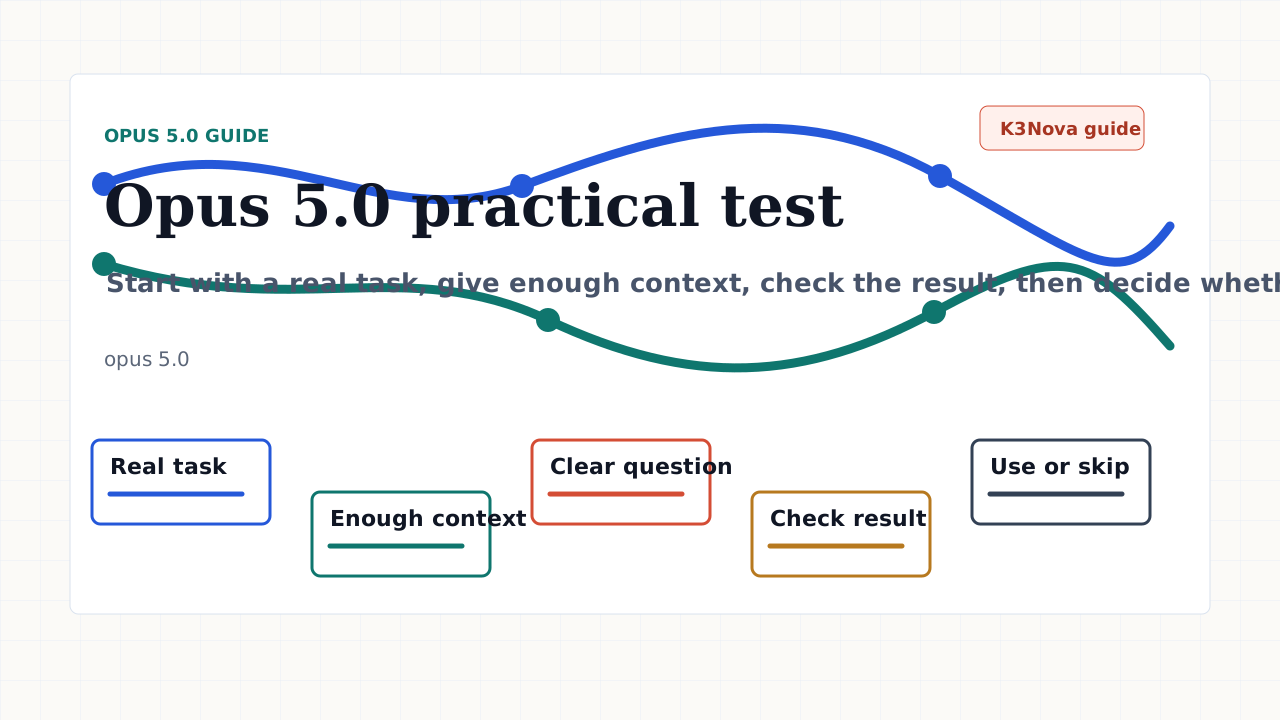
Opus 5.0 guide
Opus 5.0: what it is, who needs it, and how to try it
If you are here because you have heard about Claude Opus 5, the useful question is simple: can it help with a real task you already have? It is worth testing on code review, long documents, product decisions, research notes, or a workflow that needs careful planning in K3Nova.
Try the Opus 5.0 route when the task is too large, too detailed, or too important for a quick answer. Keep using it only if it saves review time, preserves key details, and gives you a clearer next step.
Model
Check the Opus route before you rely on it.
Context
Useful for large evidence packets, not tiny prompts.
Best fit
Code, long documents, comparisons, and planning.
Skip when
The task is short, routine, or already solved well.
Check first
Route, limits, price, privacy, and fallback.
Plain answer
What is Opus 5.0?
Opus 5.0 is the K3Nova page for evaluating Claude Opus 5 through an Opus route. In Anthropic documentation, the model ID to check is claude-opus-5; provider wrappers may expose a routed name such as anthropic/claude-opus-5. Anthropic documentation lists a 1M token context window, a 128K maximum output, adaptive thinking by default, and a Fast mode for latency-sensitive work.
For a reader, the important part is not the size of the number. It is what the model can do when you give it enough context: read more of the problem, compare details, explain tradeoffs, and return an answer you can check.
Use it when the task has real weight
If the hard part is reading, comparing, checking assumptions, or deciding what to do next, the route is worth testing.
Skip it when the task is simple
If a smaller model already gives the right answer quickly, it may only add cost, latency, and extra text.
Key facts
What Opus 5.0 facts should you check first?
Use this table before you compare answers. It keeps the model name, limits, route, cost, and review boundary close to the public sources that support them.
| Reader question | Short answer | Source |
|---|---|---|
| What is the exact model to check? | Claude Opus 5 is the model behind this Opus 5.0 guide. For API work, the model ID to check is claude-opus-5. | Anthropic docs models overview |
| What limits matter most? | Anthropic documents a 1M token context window and a 128K maximum output. Those numbers matter only when the task has enough labeled context to use them. | Anthropic docs |
| How should you prompt it first? | Ask for a short answer, evidence, risks, and next steps before requesting a long final output. That makes the first result easier to review. | prompting guide |
| Where can availability differ? | Direct Anthropic access and cloud catalogs can differ by account, region, feature support, and price rules, so check the path you will actually use. | AWS Bedrock Google Cloud Microsoft Foundry |
| What is the budgeting anchor? | Anthropic lists Opus 5 at $5 per million input tokens and $25 per million output tokens before cache, cloud-platform, and account-specific rules. | models overview |
| What should remain human-reviewed? | Use human review for legal, security, privacy, payment, policy, and other sensitive decisions even when Opus 5.0 prepares the analysis. | system card |
Before you try it
What should you check before using Opus 5.0?
Before you spend time on a trial, make sure the route is real, the task has enough context, and the answer can be reviewed. If those conditions are missing, a stronger model name will not save the workflow.
Claude Opus 5 can produce long output, so do not start with a broad essay request. Ask for a concise answer, evidence, risks, and next steps so a person can inspect the result quickly.
Use a structured prompt instead of an open-ended request.Direct Anthropic access, AWS Bedrock, Google Cloud, and Microsoft Foundry can differ by account, region, limits, and feature support. The route that works in one place may not be the route your product can call.
Check the actual platform path before rollout.The model can help organize legal, security, payment, privacy, and policy reviews, but it should not become the final approver. Treat it as a reviewer that prepares the decision, not the person who owns it.
Write the human approval step into the workflow.Artificial Analysis, CodeRabbit, BenchmarkList, Decrypt, and similar public signals can help you choose what to test first. They do not prove the model will win inside your private workflow.
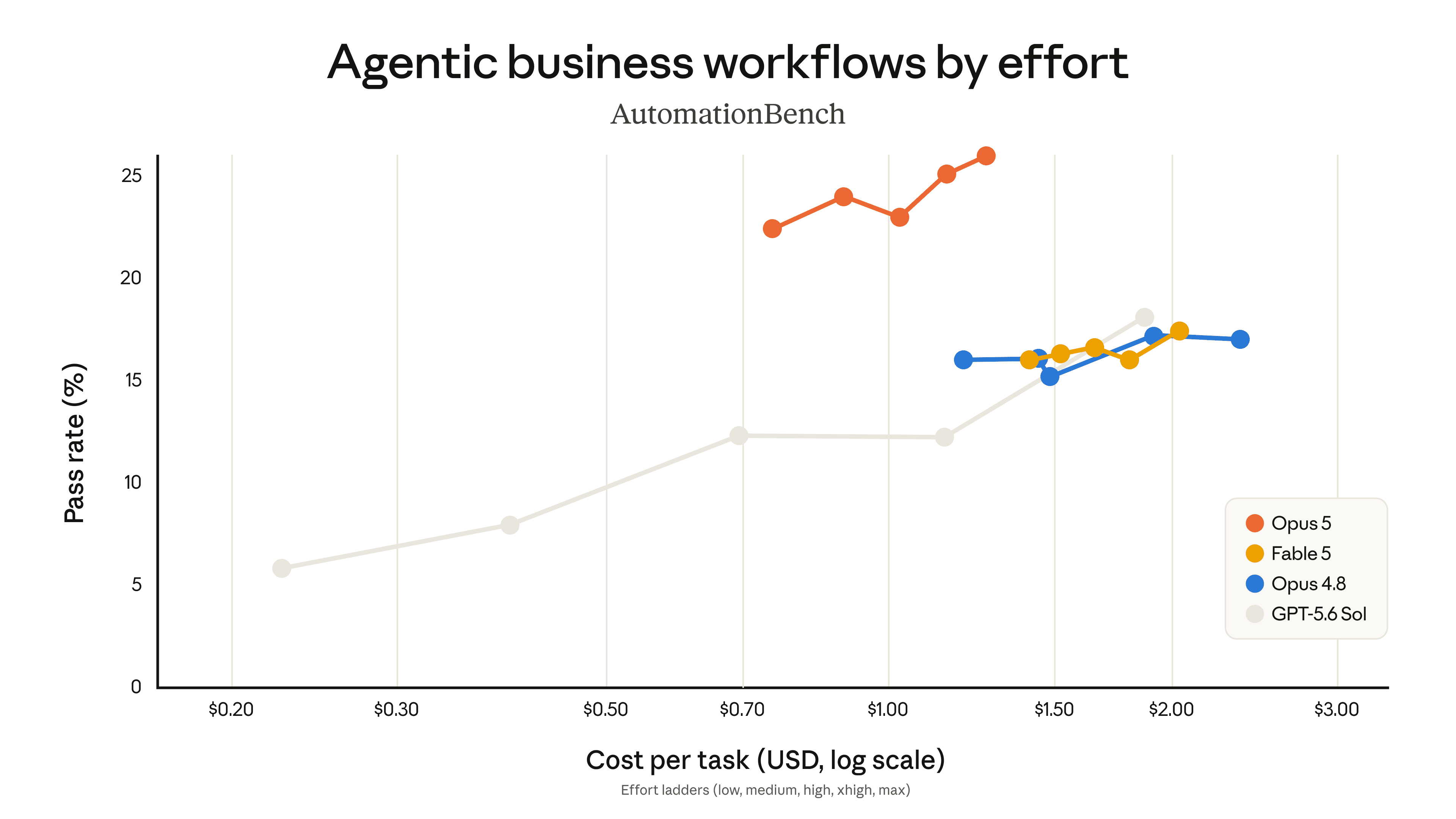
Run it on work you already struggle to review.AEOLUS wind tunnel, Sectio cell, Harvey legal workflow, AutomationBench, and Roboflow examples point toward tasks with structured evidence, domain constraints, and reviewable outputs.
Choose a task with real context, not a tiny chat prompt.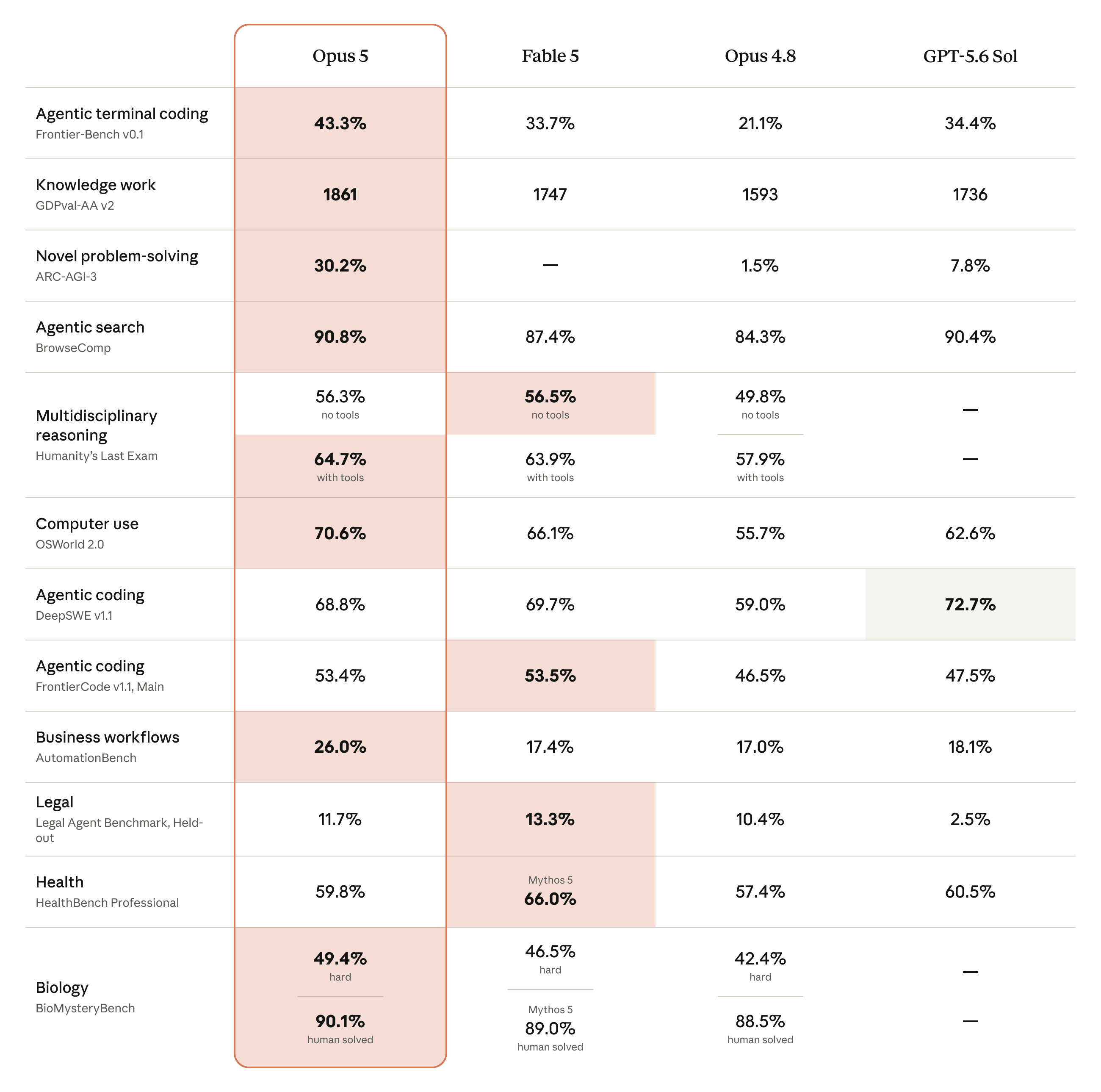
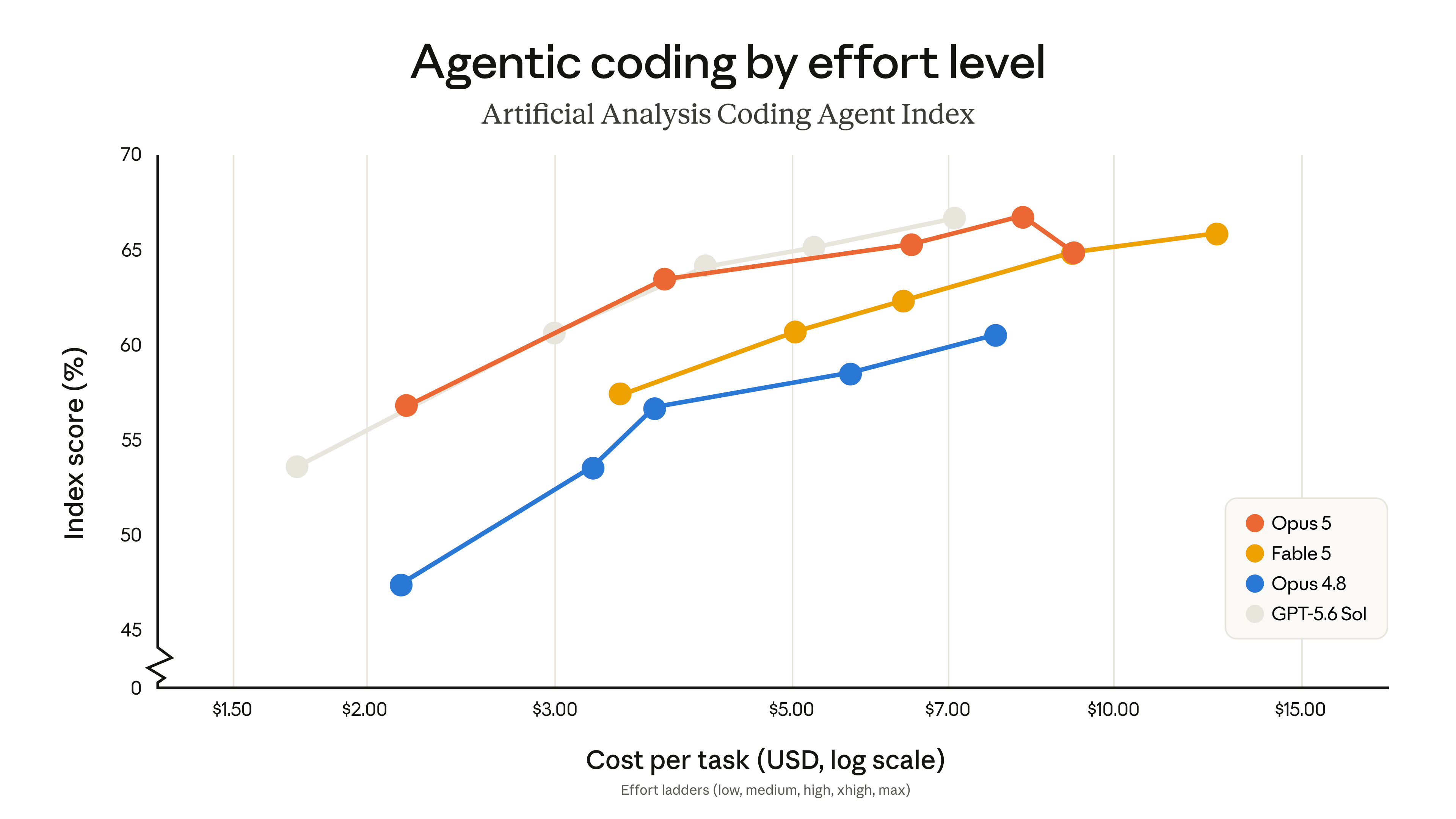
Practical meaning
What changes in your workflow?
The important shift is not bigger numbers. A useful trial should include enough evidence, a route check, and an answer shape a person can review.
A 1M context window is useful only when the input is labeled. Give the model files, sections, definitions, dates, constraints, and the question they are supposed to answer.
A 128K output ceiling can create answers that are too large to inspect. Ask for a decision memo, evidence table, risk list, or patch plan so a person can actually review it.
Use a lower-latency path for routine work, then reserve careful reasoning for code review, long-document synthesis, migration planning, and decisions where a missed detail is expensive.
Benchmark and review pages can tell you where a trial is worth running. Your own accepted diff, checked memo, or approved workflow is still the result that matters.
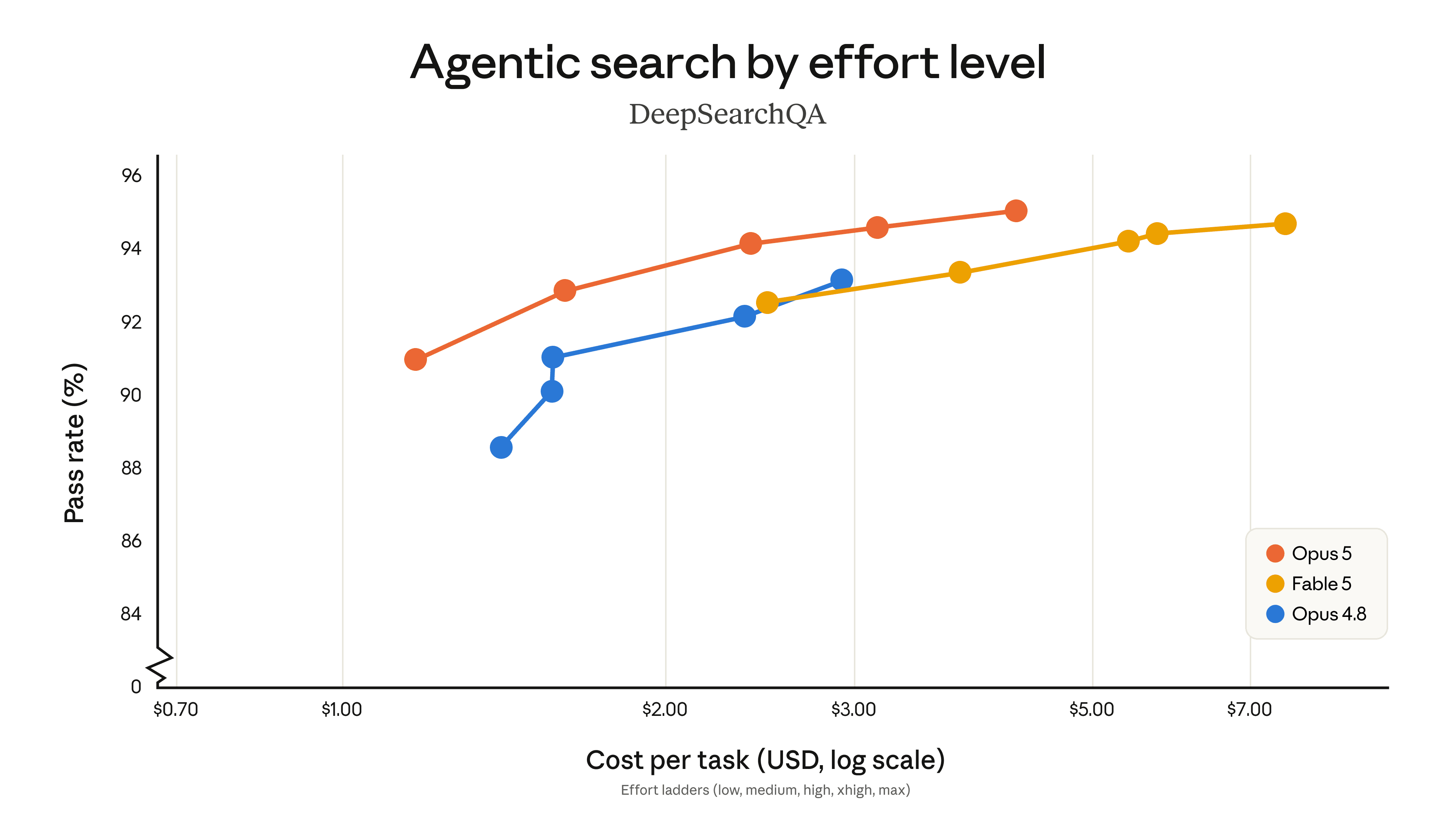
Fast decision
Should you use Opus 5.0 for this task?
Start here before opening the console. The route is most useful when more context and a stricter review loop can change the outcome.
| Task in front of you | Decision | Why |
|---|---|---|
| Multi-file code review, production bug, or migration plan | Try Opus 5.0 | The answer depends on many files, constraints, and risk checks. |
| Long report, policy, transcript, contract packet, or research folder | Try Opus 5.0 | The model has enough room to read more documents and evidence before summarizing. |
| Vendor, model, architecture, or product decision | Try if tradeoffs matter | Give it criteria, constraints, and the options you are actually considering. |
| One paragraph rewrite, quick idea list, routine classification, or simple support reply | Skip Opus 5.0 | A faster or cheaper model is usually easier to justify. |
| Private customer data, legal documents, payment flow, or security-sensitive work | Check first | Check route, account policy, privacy boundary, and human review before sending context. |
Best uses
What should you use Opus 5.0 for?
Use it when the value comes from careful reading and better judgment. These are the first tasks worth testing with the Opus 5 option in K3Nova.
Use Opus 5.0 when the answer depends on several files, a failing test, project rules, and the reason one fix is safer than another.
Use it when you need a clear summary of a long report, policy, transcript, or research packet, with important details kept separate from guesses.
Use it when you need to choose between products, models, vendors, architectures, or plans, and the tradeoffs matter more than a quick opinion.
Use it when a task has several steps, tool calls, constraints, and checkpoints, and you want a plan you can inspect before acting.
When to skip
When do you not need Opus 5.0?
The model should not become the default just because it sounds stronger. Use a faster or cheaper model for short summaries, simple rewriting, routine classification, lightweight brainstorming, and low-risk support answers. Save it for tasks where a better first pass actually changes the result.
A simple rule
- If the answer is easy to check, prefer speed.
- If the answer is expensive to check, test the route.
- If the answer affects production, legal, payment, or security decisions, require human review no matter which model writes it.
K3Nova trial
How should you try Opus 5.0 in K3Nova?
- Choose one real task: a code review, a long document, a comparison, or a planning problem.
- Paste the context the answer depends on. Label files, facts, constraints, deadlines, and anything that must not change.
- Ask for the short answer first, then the evidence, risks, and next steps.
- Compare the result with your current model. Look for missed facts, confusing assumptions, and how many follow-up prompts you needed.
- Keep it only for tasks where it repeatedly gives you a better result.
Use Opus 5.0 for this task.

Goal:
[Describe what you need to decide or create.]

Context:
[Paste the files, notes, rules, examples, or constraints that matter.]

Please return:
1. Short answer first.
2. Key facts from the context.
3. Tradeoffs and risks.
4. Recommended next step.
5. Anything I should check manually.
Copy patterns
Three useful first tests
Use one of these patterns instead of asking a vague question. The point is to give the model enough context, then force an answer a person can review.
Use this when a change touches several files or the risk is hidden in project rules.
Review this change as if you are the second reviewer before merge.

Context:
- Goal of the change
- Relevant files or diff
- Failing or changed tests
- Project rules that must be preserved

Return:
1. Merge risk in one sentence.
2. Issues by severity.
3. The smallest safer fix.
4. Tests I should run.
Use this when a summary is only useful if it preserves exceptions, dates, definitions, and contradictions.
Read this document packet and produce a decision memo.

Context:
- Source documents, pasted or attached
- What decision I need to make
- Terms, numbers, or dates that must stay exact

Return:
1. Short recommendation.
2. Evidence table.
3. Open questions.
4. Parts that need human review.
Use this when the next action depends on constraints, route checks, or a sequence that can break.
Plan this workflow before anyone acts.

Context:
- Desired outcome
- Tools or accounts involved
- Constraints, deadlines, and things not to change

Return:
1. Step-by-step plan.
2. Stop points where a human must approve.
3. What can go wrong.
4. A smaller first test.
Score the result
How do you know Opus 5.0 was actually better?
Do not keep the route because the answer sounds polished. Keep it only when it wins at least three of these five checks on a real task.
Important names, limits, dates, file paths, and exceptions survive the answer.
The answer separates source facts from guesses, estimates, and opinions.
It notices failure modes, missing checks, or tradeoffs your baseline missed.
A human can act on the answer without asking what to do first.
You need fewer follow-up prompts to make the result usable.
Before serious use
What should you check before using Opus 5.0 seriously?
Direct Anthropic access, AWS Bedrock, Google Cloud, Microsoft Foundry, and your own account settings may not behave the same way. Before you rely on this route for important work, check the one you will actually use.
Confirm that your API or cloud route is actually using claude-opus-5 or the matching cloud catalog entry.
Check context, output length, tool behavior, and latency in the account you will use.
Estimate input and output costs separately, especially for long documents and long answers.
Decide what files, contracts, customer notes, or internal records are allowed in the prompt.
Keep a faster or cheaper route for simple requests where it does not add value.
Next decision
What should you compare next?
After one real test, decide what you still need to learn: coding quality, context handling, price, or a broader review.
FAQ
Common follow-up questions
Is Opus 5.0 the exact API name?
No. Opus 5.0 is the page and console label. For API or cloud work, check Claude Opus 5, the Anthropic ID claude-opus-5, or the wrapped cloud route you use.
What should I test first?
Start with one task that already takes time: a code review, a long document, a comparison, or a planning problem.
When should I skip it?
Skip it for short answers, simple rewriting, routine classification, or anything a smaller model already handles well.
How do I judge the answer?
Check whether it preserved the important facts, explained the tradeoffs, named risks, and reduced follow-up work.
What has to be checked before serious use?
Confirm model routing, cloud availability, account limits, price rules, private-data boundaries, and fallback behavior.